Applied AI in Healthcare (AAI)


In the 'Applied AI in Healthcare' team, we strive to apply machine learning algorithms and "Deep Learning" models in clinical settings. Artificial intelligence, as we define it, encompasses methods that simulate human-like behavior for external observers.
In the specific sub-discipline of machine learning, our approach involves data analysis, constructing and adapting models that enable programs to "learn" through experience. We guide clinical projects benefiting from these methods from the early conceptual phase, providing advice on data collection and cleaning, to model development and critical evaluation. The foundation can be both routine medical diagnostics and study data, with a particular focus on classical tabular data and complex time series, such as sensor data or electronic health records.
In the Applied AI in Healthcare team, the generated algorithms and models are already seen as precursors to AI-based medical devices. Our focus remains on proximity to users in clinics, emphasizing the explainability of the models and their results (Explainable AI).
IAM-AI is a member of the
bAIome
.

Publications


Current projects
-
A Cap for Detecting Hypomimia

A Cap for Detecting Hypomimia
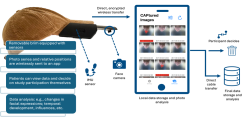
Parkinson's Disease (PD) is an incurable neurodegenerative disorder characterized by the loss of dopamine-producing cells in the substantia nigra. The resulting symptoms can significantly impact patients' quality of life. Current wearable technology is capable of identifying motor symptoms like tremor, but largely unexplored symptoms such as hypomimia, a reduction in facial expressiveness, remain difficult to assess. Present methods, such as in-clinic video recordings, do not allow for continuous monitoring in daily life, which is crucial for understanding disease progression and adjusting treatment strategies. Our team, in collaboration with the Movement Disorders and Deep Brain Stimulation Working Group led by PD Dr. med. Monika Pötter-Nerger, has developed and prototyped an innovative measurement instrument. This device can precisely monitor subtle facial muscle movements and wirelessly transmit the data to an iOS application. We are currently seeking dedicated medical doctoral candidates for the clinical management and initial exploratory analyses of this project. Interested individuals are encouraged to contact us via email. For further information, Christopher Gundler and Alexander Wiederhold are available as contacts.
-
-
Internet of Things and Parkinson's disease
Internet of Things and Parkinson's disease
To improve the quality of life for patients with Parkinson's disease, inpatient examinations and treatments are often conducted. During hospital stays, adjustments to the current treatment plan are prioritized. Accurate and personalized treatment is crucial for therapeutic success.
With the help of a specialized tablet application, patients have the opportunity to independently record relevant parameters of their current well-being and other non-motor symptoms. Similar to a digital diary, this allows for the collection of a wide range of disease-relevant data. This is complemented by the use of sensors that communicate with the tablet through locally networked systems, enabling the tracking of key vital parameters over time.
Through the use of these connected systems, we hope to gain new insights into the severity of Parkinson's disease symptoms. In a previous project, we have already collected comparable data as well as preliminary movement data and medication intake.